How it works
One operator for the whole chain of custody
From the first form to the recovery report, the same company handles scheduling, transport, grading and downstream placement. Here is exactly what happens.
- 01
Schedule
Tell us what you have and where. Dispatch confirms your pickup window within two business days, and we handle the hazmat paperwork before the truck arrives.
- 02
Certified pickup
DOT-trained crews arrive with rated crates, fire-suppression blankets and full chain-of-custody documentation for every load.
- 03
Sort and test
At our Hatfield Street facility, modules are weighed, voltage-tested and graded on a bench built for second-life decisions.
- 04
Recycle or reuse
Reusable modules ship to storage and second-life buyers. The rest go to audited smelters for lithium, nickel, cobalt and copper recovery.
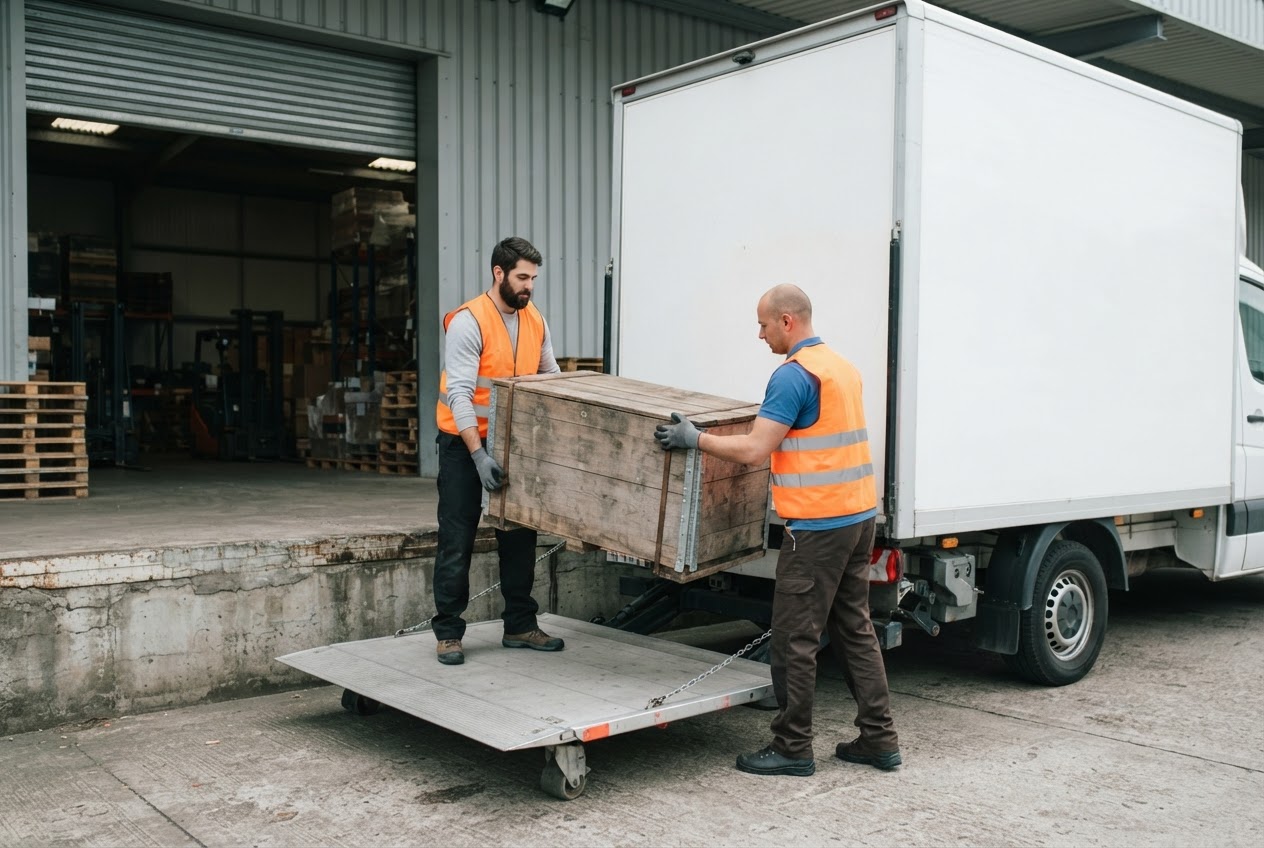
Step 02 — Certified pickup
Crated to UN 3480, scanned at the dock
Every module is crated to UN 3480 standards, scanned at the dock and tracked end to end. You get a signed manifest the same day.
- DOT-trained crews with fire-suppression blankets on every truck
- Signed chain-of-custody manifest delivered the same day
- Damaged and swollen modules handled under separate protocols
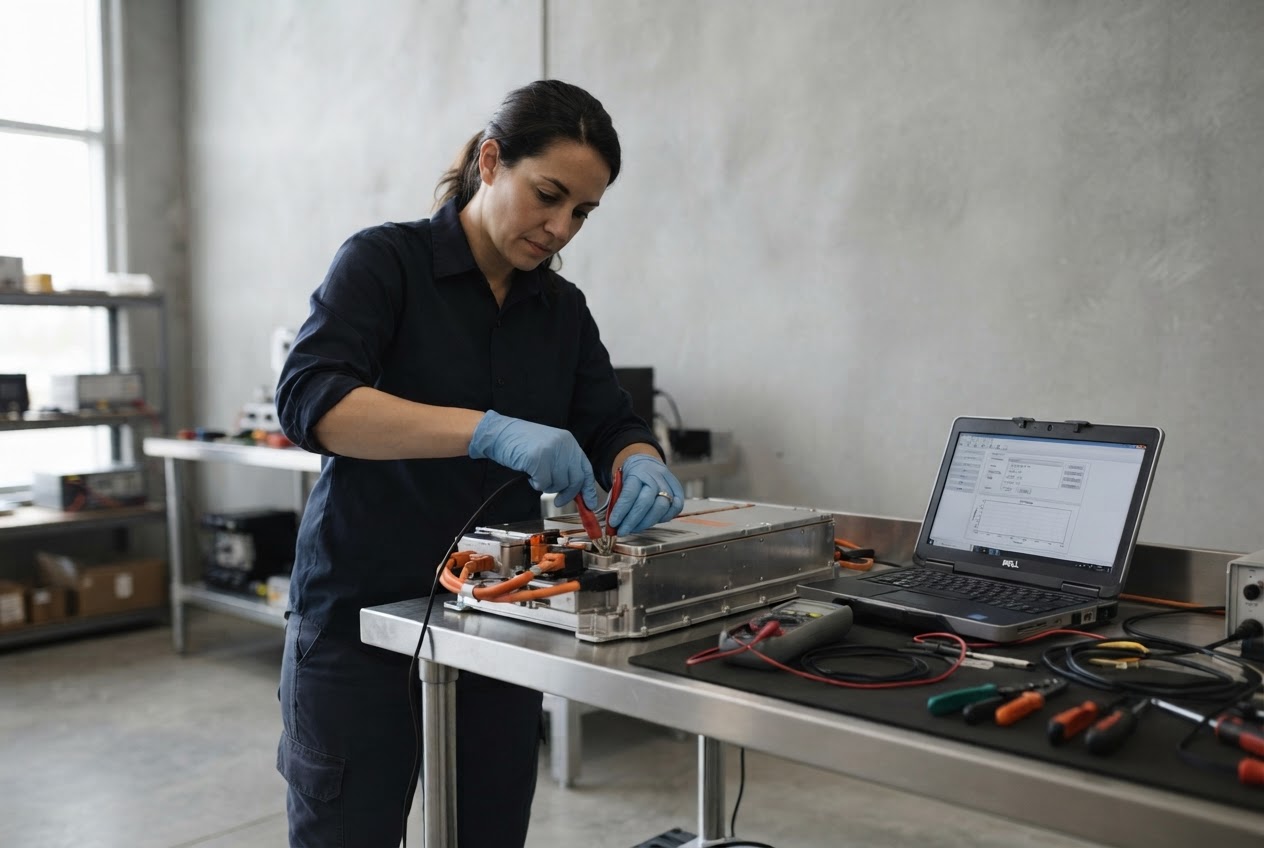
Step 03 — Sort and test
Every module gets a grade it has earned
Each module gets capacity, internal-resistance and thermal readings. Grades A and B go to reuse partners; C and D go to material recovery.
- Capacity, internal-resistance and thermal readings per module
- Grade A and B routed to second-life buyers; C and D to material recovery
- Full test record attached to each lot, yours to keep
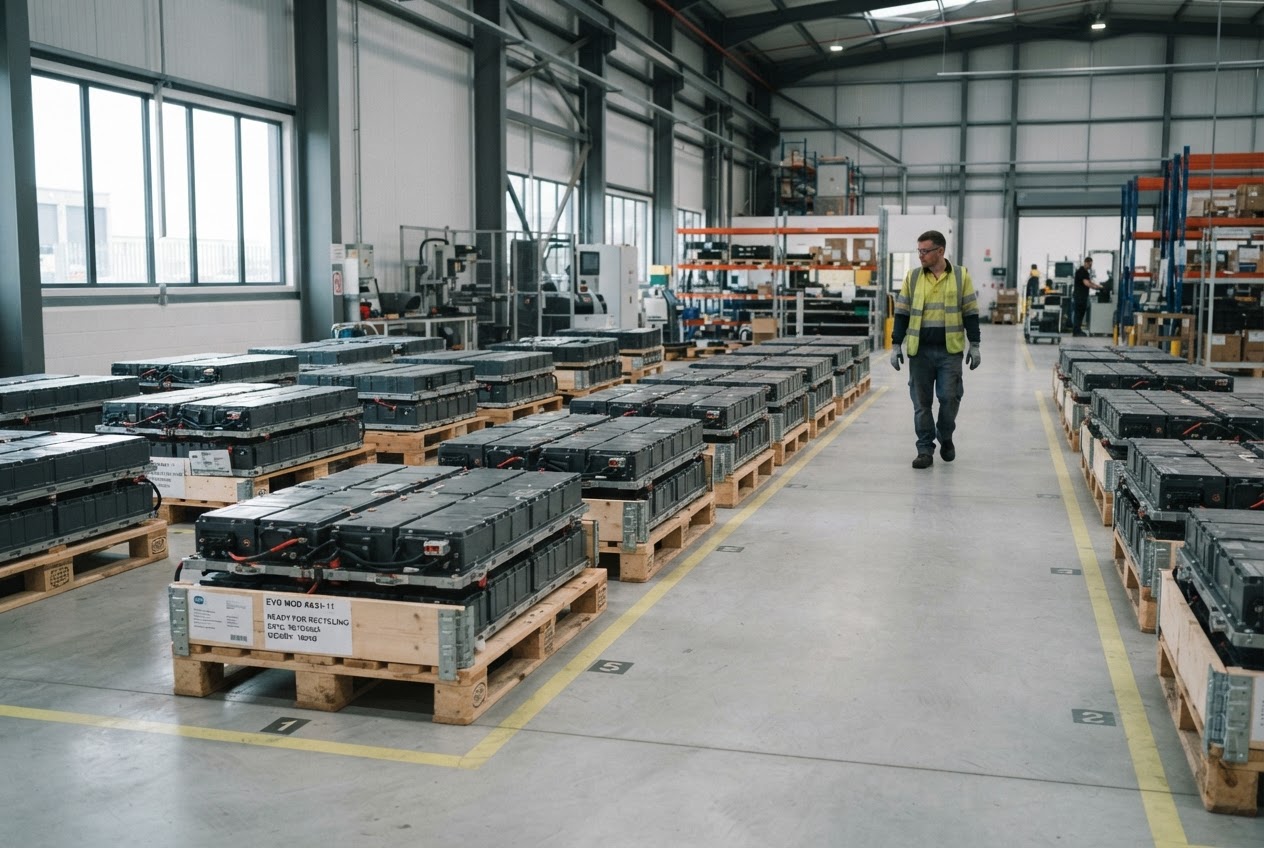
Step 01 and 04 — Schedule, then Recycle or reuse
Every lot has a destination before it is picked up
We report recovery rates per lot, so you can put real numbers in your sustainability disclosure instead of estimates.
You submit chemistry, module count and site access details. We confirm a window and send a pre-pickup checklist so nothing stalls on the day.
FAQ
Frequently asked questions
Everything customers ask before their first pickup — handling, chemistries, pricing, liability, paperwork and timing.
Yes. Damaged, swollen or thermally compromised modules travel in UN-rated crates with fire-suppression blankets, on a separate manifest. Tell us when you book so the crew brings the right packaging.
NMC, NCA and LFP modules and packs from passenger EVs, delivery vans and shuttles. For anything else, send the spec sheet and we will confirm within two business days.
Shared routes cost less, and qualifying repair-shop volumes ride free. Dedicated trucks are quoted per pickup. Price depends on weight, chemistry, condition and distance from our route network.
Ferrous takes custody at signature. From that point, our hazmat carrier insurance and chain-of-custody documentation cover the load.
A signed bill of lading at pickup, then a per-lot chain-of-custody report with module weights, grades and final outcome. See a sample report.
Dispatch confirms your pickup window within two business days. Most shared-route pickups happen within 3–8 business days; dedicated trucks can go in 2.
Ready to clear your batteries?
Send chemistry, module count and site access details. Dispatch confirms your window within two business days.
Questions about handling, permits or manifests? Our compliance team answers directly.